Residential Lease Agreement - 7 Pages
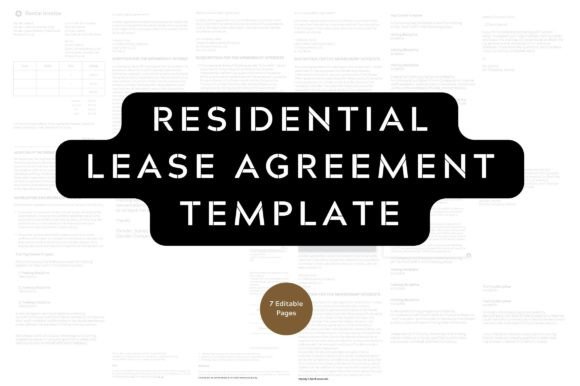
The Residential Lease Agreement - 7 Pages is a comprehensive and professional document designed to streamline the rental process for both landlords and tenants. This agreement serves as a legally binding contract that outlines the terms and conditions of a residential lease, ensuring clarity and protection for all parties involved. Whether you're a real estate agent, a private homeowner, or a small business owner looking to manage property rentals, this template offers a structured approach to creating a reliable and effective lease agreement.
Understanding the Role of a Residential Lease Agreement
A residential lease agreement is more than just a formality; it's a critical component of property management. It sets the foundation for the relationship between the landlord and the tenant by detailing essential information such as rent amount, payment schedule, security deposit, maintenance responsibilities, and rules regarding property use. The 7-page format ensures that all necessary aspects are covered without overwhelming the user with unnecessary complexity.
This agreement fits into the broader process of property management by providing a clear framework for negotiations, onboarding new tenants, and maintaining consistent communication throughout the lease term. It also plays a vital role in legal compliance, helping to prevent disputes and misunderstandings that can arise from ambiguous or incomplete agreements.
How to Use the Residential Lease Agreement - 7 Pages
The Residential Lease Agreement - 7 Pages can be used at various stages of the rental process. Before entering into a lease, it helps both parties understand their rights and obligations. During the lease term, it serves as a reference point for resolving issues or making adjustments. After the lease ends, it provides a record of the terms agreed upon, which can be useful for future reference or in case of legal disputes.
For example, a real estate agent might use this template when preparing a lease for a new tenant. By customizing the agreement with specific details about the property, the agent ensures that the tenant is fully informed about the terms of the lease. Similarly, a small business owner who rents out a property for short-term stays can use the template to create a standardized agreement that covers all necessary aspects, reducing the risk of errors or omissions.
Features of the Residential Lease Agreement Template
The Residential Lease Agreement - 7 Pages includes a range of features that make it easy to use and customize. One of the key benefits is that it comes in multiple formats, including PDF, PNG, SVG, and JPG, allowing users to choose the file type that best suits their needs. This flexibility ensures that the template can be accessed and edited on various devices and platforms.
The template is also editable, meaning users can modify elements such as images, color schemes, fonts, and background colors. This level of customization allows businesses to align the agreement with their brand identity, making it look more professional and cohesive. Additionally, the ability to resize the document ensures that it can be printed in standard A4 size or adjusted to fit other requirements.
Integration with Other Tools and Resources
The Residential Lease Agreement - 7 Pages works well with other tools and resources commonly used in property management. For instance, it can be integrated with digital platforms such as property management software, where lease agreements are stored and managed alongside other documents. This integration helps maintain organization and ensures that all relevant information is easily accessible.
Users can also combine the template with other resources, such as tenant screening forms, move-in checklists, and maintenance request forms. These additional tools help create a complete rental management system that supports efficient operations and enhances the overall experience for both landlords and tenants.
Practical Implementation Tips
To get the most out of the Residential Lease Agreement - 7 Pages, it's important to approach its implementation with care and attention to detail. Start by reviewing the template thoroughly to understand its structure and content. Identify any sections that may need customization based on the specific needs of your property or business.
When editing the template, consider using a tool like Canva, which offers a user-friendly interface for designing and formatting documents. This tool allows for drag-and-drop functionality, making it easy to adjust elements such as text placement, image size, and color schemes. By taking advantage of these features, you can create a polished and professional-looking agreement in a fraction of the time it would take to design one from scratch.
Workflow Examples and Observations
One practical workflow involves using the Residential Lease Agreement - 7 Pages when a new tenant is being onboarded. Begin by gathering all necessary information about the property and the tenant, then customize the template with the relevant details. Once completed, review the document to ensure accuracy and clarity before printing or sharing it electronically.
Another example is when a landlord needs to update an existing lease agreement. Instead of starting from scratch, use the template as a base and make the necessary changes. This approach saves time and reduces the risk of errors, as the template already includes the essential elements of a valid lease agreement.
Observing how other professionals use the template can also provide valuable insights. For instance, some small business owners may use the agreement to manage short-term rentals, while others may use it for long-term leases. Understanding these different use cases can help you tailor the template to better suit your specific needs.
Factors to Consider for Long-Term Use
When using the Residential Lease Agreement - 7 Pages over the long term, it's important to consider factors such as preparation, compatibility, and usability. Ensure that the template is compatible with your preferred software and devices, and that it remains easy to edit and update as needed. Regularly review the agreement to ensure that it continues to meet your evolving needs and complies with any changes in local laws or regulations.
Consistency is also key. By using the same template for all lease agreements, you can maintain a uniform standard across your properties, which enhances professionalism and reduces confusion. Additionally, keeping records of all signed agreements ensures that you have a clear history of past leases, which can be useful for future reference or in case of disputes.